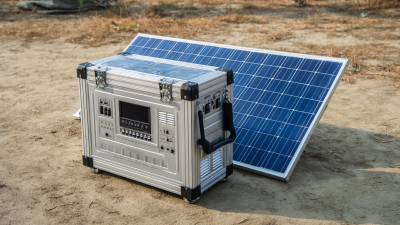
A quiet camping spot can really change how you think about useful power. I mean, one evening, having your phone, a lantern, and a small cooler might be way more important than chasing after some huge capacity number that looks good on paper. So, in this guide, we’re comparing seven different solar generator deals—whether you’re using them for home backup or camping—paying attention to how many usable watt-hours they have, their output power, recharging options, and how easy they are to carry around. The right pick really depends on what you want to power and for how long.
Now, a quick note from solar reliability expert Dr. Sarah Kurtz—here’s a little takeaway of her approach, not a direct quote: “Pick equipment based on your real energy needs, not just the biggest number the box braggingly displays.” That’s pretty important because having a big battery capacity doesn’t automatically mean your outlets can deliver a lot of power at once. Make sure to check both. Also, think about how you’re planning to recharge—whether from the wall, your car, or solar panels that are compatible. Keep in mind that the solar panels’ advertised outputs are often optimistic; things like shading, clouds, and the angle of the panels can really cut down on how fast they charge outdoors.
Don’t overlook the small stuff either. A heavy unit might feel totally fine next to your car, but suddenly feels like a burden when you’re trying to hike a narrow trail. For use at home, look into how long your essential devices can run and what the manufacturer recommends for operation. When camping, it’s also smart to think about weight, noise level, charging speed, and what ports are available. Plus, remember—deals change quickly, and a lower price doesn’t always mean you’re getting a better deal. Be sure to compare what’s included, warranty details, and current specs before pulling the trigger. Honestly, there’s no one-size-fits-all solution; no single generator will work perfectly for every trip or household. These suggestions are meant to help you see where trade-offs happen, especially if a tempting discount might not actually fit what you need most.

How Solar Generators Convert Sunlight into Usable Power
A solar generator turns sunlight into electricity through photovoltaic cells in its panels. These cells produce direct current, or DC, when light reaches them. A charge controller manages the incoming power and helps protect the battery from unsuitable charging conditions. The battery stores that energy for later use. That takes time. Shade, clouds, panel angle, and temperature can all affect how quickly it charges, so advertised charging times are best treated as estimates.
When you plug in a household appliance, an inverter converts stored DC power into alternating current, or AC. USB ports and some other outputs may supply DC directly. For camping, this can mean charging a phone while keeping a small light running; at home, it may provide limited backup for essential devices. Check both battery capacity and output limits before choosing a unit. A large battery cannot run an appliance that exceeds its rated output. I still find this easy to underestimate: usable power depends on the device, the weather, and how long it runs. Small details matter. Folded panel size, cable reach, and clear space in the sun can shape the real experience as much as the headline capacity.
Key Features to Compare When Choosing a Solar Generator
Choosing a solar generator starts with the devices you actually plan to run. A phone needs little energy, while a camping fridge may run for hours and draw extra power when its compressor starts. Compare battery capacity, listed in watt-hours, with the energy your devices use. Then check continuous output and surge capacity; a large battery alone cannot power every appliance.
Look closely at the ports and charging options. Count the AC outlets, USB ports, and any 12-volt connections you will use at home or around camp. Check the solar input limit, too, and confirm whether panels are included or sold separately. Panel wattage affects recharge time, but sunlight, shade, angle, and temperature can change real-world results.
Check the label. Ratings are not promises.
Weight and noise matter more after you carry a unit across a campsite or keep it near a bedroom. Compare handle design, charging time, battery-cycle information, warranty terms, and safety guidance in the product documentation. I find portability easy to underestimate: a powerful unit can be awkward on uneven ground. Weather resistance also varies, so do not assume the generator or its panels can sit in rain. There is no perfect comparison; the best fit depends on your loads, available sunlight, and how often you will move it.
Best Solar Generator Deals for Home Backup
For home backup, a solar generator is most useful when it runs essentials, not every appliance.
The U.S. Energy Information Administration’s Electric Power Annual reported average customer interruptions of 5.6 hours in 2022, excluding major events, and 7.9 hours including them. Those figures describe U.S. grid reliability, not every household’s risk. A refrigerator, modem, and a few LED lamps can make a practical starting list. Check both battery capacity, measured in watt-hours, and inverter output, measured in watts. A low sale price means little if the unit cannot handle a refrigerator’s startup surge.
Compare deals by usable capacity, continuous output, solar input limit, and warranty terms. NREL’s PVWatts guidance shows why panel output varies with location, weather, and system orientation; recharge estimates should account for cloudy days. A larger battery may seem safer, but it costs more and takes longer to refill. That trade-off is easy to underestimate.
Tips:
Add the running watts of essential devices, then allow headroom for startup surges. Small loads first. Check whether the listed capacity is usable, and test the setup before an outage. Keep panels clear of shade, and remember that winter sunlight can be disappointing. A generator is not a whole-home solution unless its output and wiring are designed for that role.
Best Solar Generator Deals for Camping and Outdoor Use
For camping, a useful solar-generator deal is not simply the biggest discount. Match the battery’s watt-hours to your actual load: a 10-watt camping lamp running six hours uses about 60 watt-hours, before conversion losses. Add phone charging and a small cooler, and the demand rises quickly. The Outdoor Industry Association’s 2024 Outdoor Participation Trends Report counted 175.8 million U.S. participants in outdoor recreation during 2023. That broad audience includes very different trips, so one “best” capacity will not suit every campsite.
Check continuous AC output, solar input limits, weight, and recharge time before comparing prices. A high-wattage appliance may exceed the inverter rating even when the battery has plenty of stored energy. NREL’s PVWatts tool estimates solar production using location, weather, system size, and other inputs; actual portable-panel output also shifts with shade and angle. A panel beside a tent can lose useful sun when trees move across it. Small, but important.
The U.S. Bureau of Economic Analysis reported that outdoor recreation added about $1.2 trillion to the economy in 2023. That scale says little about any single trip, though. For a weekend, prioritize a manageable carry weight, clear battery-status readings, and outlets that match your devices. Read the fine print on bundled panels: advertised charging times usually assume favorable sunlight. I’d leave some capacity unused, too; planning every watt perfectly is fragile, and campsite conditions rarely cooperate.
How to Match Battery Capacity and Output to Your Needs
A solar generator’s battery capacity, measured in watt-hours, tells you how long it can run your equipment. Its output rating, measured in watts, tells you which devices it can power at the same time. Add each device’s wattage and estimated runtime: a 60-watt camping cooler running for eight hours uses about 480 watt-hours. Add lights and phone charging, then leave room for conversion losses and unexpected use. Check the label. A motorized appliance may also need a brief surge of power when starting, so compare its starting demand with the generator’s surge rating, not just its continuous output.
For home backup, list essential loads rather than assuming a compact unit can run an entire household. A refrigerator, router, and a few lamps are a more realistic starting point; heating appliances can drain a battery quickly. NREL’s 2024 Annual Technology Baseline models utility-scale lithium-ion storage at 85% round-trip efficiency, but that figure is not a promise of usable capacity for a portable generator. Check the unit’s stated usable watt-hours and output limits. My estimates would still be rough: appliance cycles, cold weather, and cloudy days change real performance. Compare those needs with each deal’s specifications, not its headline capacity alone.
7 Best Solar Generator Deals for Home and Camping — How to Match Battery Capacity and Output to Your Needs
Compare representative solar-generator size tiers by battery capacity, continuous AC output, solar-input limit, and estimated price. Choose capacity for how long you need power and output for the devices you plan to run at the same time.
| Option |
Battery Capacity |
Continuous AC Output |
Maximum Solar Input |
Typical Deal Price (USD) |
Best Suited For |
How to Match It to Your Needs |
| 1. Compact camp kit |
About 300 Wh |
About 300 W |
Up to about 100 W |
$200–$350 |
Phones, headlamps, cameras, and small USB devices |
A lightweight choice for low-wattage essentials. Check that each device’s running wattage stays below the unit’s AC output limit. |
| 2. Weekend essentials |
About 500 Wh |
About 500 W |
Up to about 200 W |
$300–$500 |
Short camping trips, lighting, phones, and a small fan |
Consider this size when you need more stored energy than a compact unit provides but do not need to power high-wattage appliances. |
| 3. Extended camping |
About 750–800 Wh |
About 1,000 W |
Up to about 400 W |
$450–$700 |
Several small devices, camera equipment, and selected small appliances |
The higher output can accommodate more demanding devices, but total runtime still depends on battery capacity and the combined load. |
| 4. Home essentials starter |
About 1,000 Wh |
About 1,500–1,800 W |
Up to about 500 W |
$600–$900 |
Router, lights, laptops, and other essential low-to-medium loads |
A practical middle ground for brief outages. Add the running wattages of devices used simultaneously and allow headroom for startup surges. |
| 5. Camping and backup balance |
About 1,500 Wh |
About 1,800 W |
Up to about 600 W |
$900–$1,300 |
Longer trips or several hours of selected household essentials |
Choose more capacity when you need longer runtime; it does not automatically mean the unit can run a higher-wattage appliance. |
| 6. High-capacity home backup |
About 2,000 Wh |
About 2,000–2,400 W |
Up to about 1,000 W |
$1,200–$1,800 |
Multiple essential devices and longer backup periods |
Compare both the output rating and battery capacity with your appliance list. Some appliances have startup demands higher than their normal running wattage. |
| 7. Large-capacity backup |
About 3,000 Wh |
About 3,000 W |
Up to about 1,200 W |
$2,000–$3,000 |
Extended backup for a broader set of compatible household loads |
Best for users prioritizing stored energy and stronger output. Confirm appliance compatibility, outlet limits, and whether the battery can be expanded. |
Important: These are representative specification tiers, not listings for specific products. Price ranges are broad estimates, not verified live offers, and vary by retailer, region, included accessories, and sales. Actual usable energy is lower than the stated battery capacity because of conversion losses. Solar charging speed depends on sunlight, panel orientation, temperature, and the unit’s input limits; check the generator and panel specifications before purchasing.
Solar Charging Options, Setup, and Compatibility
A good solar generator deal is more than a low price. Check its solar input limit, supported voltage range, and charging connector before comparing panel wattage. A panel rated above the generator’s limit will not necessarily charge it faster. Sunlight changes everything. Clouds, shade, and panel angle can reduce output noticeably, so leave room in your plans for slower charging.
For setup, place the panels in direct sun and keep the power station in a dry, shaded spot. Adjust the panels as the sun moves, and secure them against wind. Use only compatible cables and follow the unit’s manual for voltage and connection order. At home, test the setup outdoors before relying on it during an outage. I once assumed a sunny window would be enough; glass and indoor placement made charging frustratingly slow.
Compatibility matters when choosing a deal. Check whether the package includes panels, adapters, and cables, or whether those are sold separately. Match the generator’s output ports to the devices you actually need, such as a phone, laptop, or small camping cooler. For a cooler, confirm its running and startup power requirements. A compact setup may suit weekend trips, while home backup usually calls for more capacity and dependable recharging. Specs can look tidy on a page, but real use is less predictable. Keep a little margin.
Safe Operation and Routine Solar Generator Care
Keep a solar generator dry, shaded, and uncovered while it runs. Leave space around its vents; a warm case should never be wrapped in a blanket or tucked under camping gear. Before use, check the cable insulation, plugs, and battery case for cuts, looseness, swelling, or unusual heat. Stop using a unit that looks damaged, and follow its manual for service. Small checks matter.
Routine care is simple, but easy to put off. Wipe dust from ports with a dry cloth, keep connectors away from sand, and store the unit in a cool, dry place. Recharge it according to the manufacturer’s storage guidance rather than leaving it empty for months. I would not rely on a generic charging schedule: battery chemistry and built-in controls vary. That detail is easy to miss.
For perspective, NREL’s 2024 Annual Technology Baseline uses about 85% round-trip efficiency for utility-scale lithium-ion storage. That figure is not a rating for portable solar generators, but it illustrates that energy conversion involves losses. Keep expectations realistic when sizing a unit for a fridge or campsite lights. Never block ventilation while charging, and avoid wet connectors. A quick inspection before each trip may feel repetitive; skipping it is the less useful shortcut.
Choosing the Right SOLAR INVERTER UD SERIES: A Practical Guide to 800W–10,000W Options
Choosing an inverter between 800W and 10,000W starts with matching its continuous output to the loads you expect to run at the same time. For a compact, lower-demand setup, this 800W-class option may be suitable when the combined appliance load stays within its rated capacity. Its peak-load ratio is 3:1, which can help accommodate brief startup surges, but it does not increase the power available for sustained operation. Check appliance ratings and startup requirements before choosing a size, especially if you plan to run several devices together.
This model provides 220VAC output with ±10% tolerance and accepts AC input at 154–264VAC or 77–132VAC, ±3V, at 50/60Hz. Its PWM solar controller is rated at 12V/60A, supports a PV input range of 15–150VDC, and allows up to 800W of PV array power; the maximum mains charging current is 19A. These limits make it important to size the panel array and battery system to the unit rather than assume it can support a larger 10,000W installation. Lithium batteries can self-start from mains power, but the inverter has no lithium battery communication, so verify compatibility and operating settings with the battery specifications.
Conclusion
This guide explains how solar generators turn sunlight into usable electricity and what to compare when choosing one, including battery capacity, power output, charging speed, portability, and available outlets. It highlights Solar Generator Deals suited to home backup, where higher capacity and dependable output can help keep essential devices running, as well as compact options for camping and other outdoor activities. The right choice depends on the appliances and devices you plan to power, how long you need them to run, and whether you need to operate several items at once.
You’ll also learn how to estimate your power needs, select compatible solar panels, and set up a charging system that fits your routine. Practical guidance on safe operation and regular care can help maintain performance over time, whether your generator is used at home or taken outdoors. By comparing features with your intended use, you can find an option that balances capacity, convenience, and value.


 business@roofer.cn
 +86 13502883088